


Kashmiri Specialities
Premium Kashmiri Saffron (Kesar)
Hand-picked whole strands · Saffron fields of Pampore, Kashmir
Price on request
We use a session cookie to keep you signed in and your basket saved. Analytics cookies are set only if you accept. Cookie policy
Guide
Two tins of saffron from the same field in the same week can differ in price by half. The difference is not always quality — often it is grade, and grade is something you can learn to read in about ten minutes.
Updated for the 2025 harvest · 9 minute read
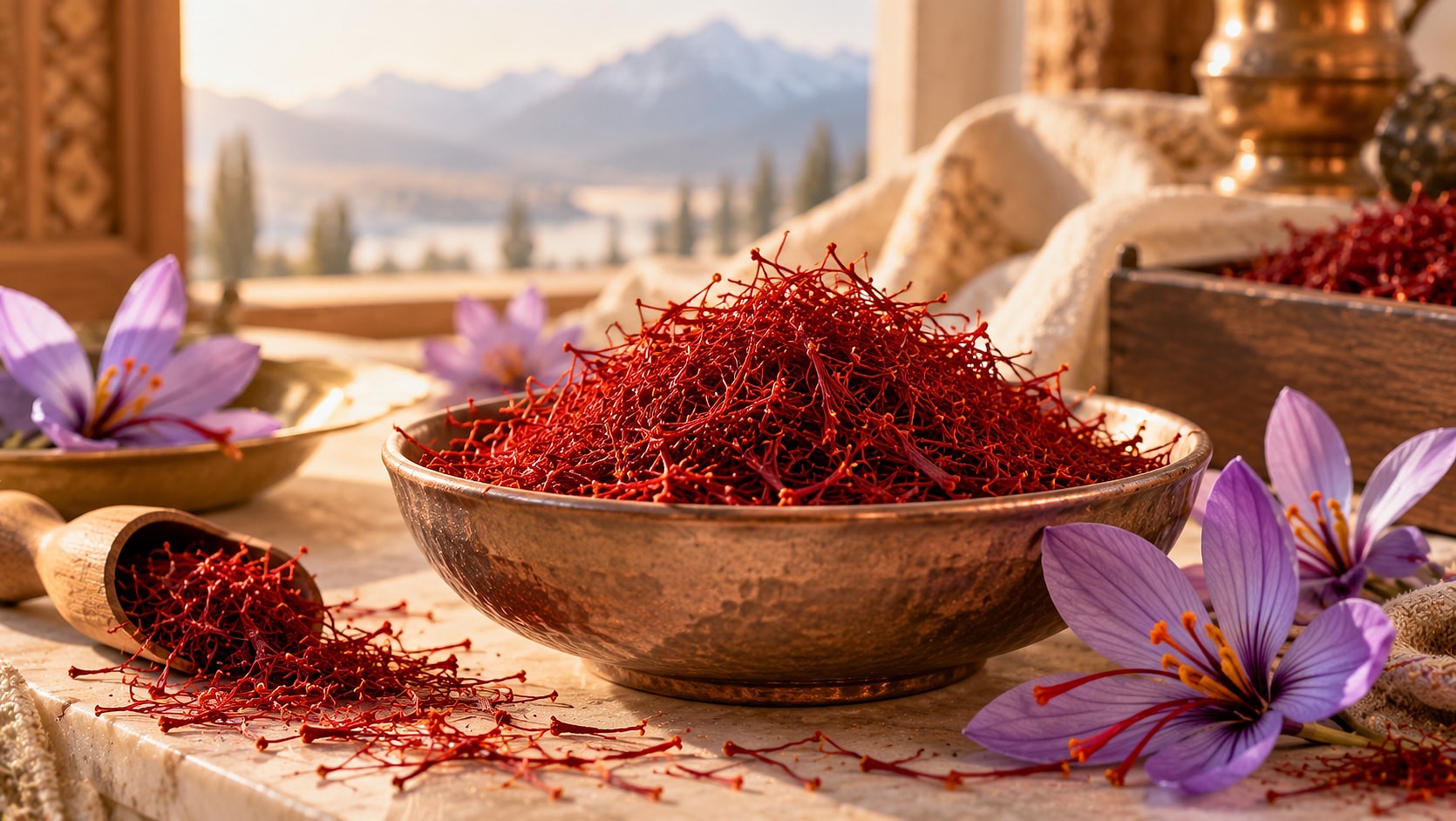
Two tins of saffron from the same field in the same week can differ in price by half. The difference is not always quality — often it is grade, and grade is something you can learn to read in about ten minutes.
The saffron crocus produces a purple flower with three red stigmas inside it. Those stigmas are saffron. They sit at the top of a pale yellow or white stalk called the style, which holds them up but carries almost no colour and very little aroma.
Every grading question comes down to one thing: how much of that pale style was left attached when the saffron was dried and packed. Because the style weighs something and contributes nothing, saffron sold with more style attached is weaker per gram — and should be cheaper per gram.
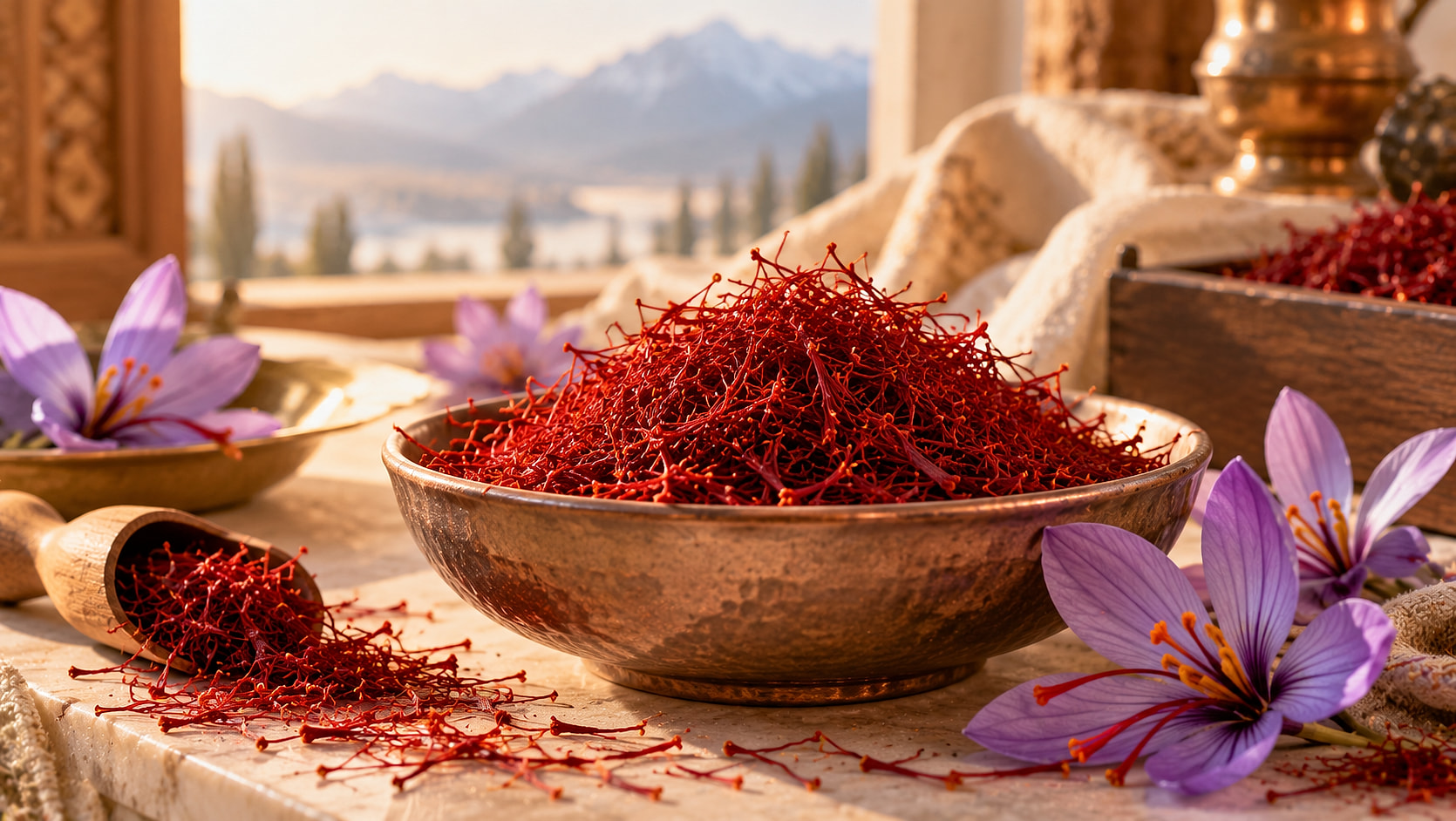
In the Kashmiri trade you will mostly encounter three terms.
| Grade | What it is | Colour | Relative strength | Typical use |
|---|---|---|---|---|
| Mongra also written Mogra |
All-red stigma, style trimmed away by hand | Uniform deep red | Strongest | Kheer, biryani, anything where colour is the point |
| Lachha also written Lacha |
Stigma with a short length of pale style attached | Red with visible pale tails | Good | Daily saffron milk, tea, general cooking |
| Zarda sometimes Guchhi |
Largely style with little stigma; sold as a lower grade | Mostly yellow or pale | Weak | Rarely worth buying at any price |
A seller who refuses to name the grade is usually selling Lachha at a Mongra price. That is the most common and most profitable deception in this category, and it does not require any adulteration at all.
Internationally, saffron is graded by laboratory measurement rather than by trade name. The standard, ISO 3632, sorts saffron into Category I, II or III based on three numbers derived from a spectrophotometer reading:
If a seller offers you a test report, these are the three lines to look at. If the report is undated or carries no lot reference, it is decoration.
A saffron flower yields three stigmas, each a few centimetres long, and the crop flowers for roughly two weeks a year. Producing a kilo of dried saffron takes somewhere in the region of a hundred and fifty thousand flowers, all picked by hand at dawn and separated by hand the same day.
Trimming the pale style off each thread to make Mongra is an additional hand operation, and it throws away weight the seller could otherwise have charged you for. That is the entire reason Mongra costs more. It is labour and yield, not marketing.
Buy Mongra if you cook with saffron occasionally and want the result to be unmistakable — a festival kheer, a biryani for guests, a gift. You will use fewer threads, so the cost per dish is closer than the cost per gram suggests.
Buy Lachha if saffron milk is a daily habit. Increase the quantity by roughly a quarter and you will not notice the difference in a glass.
Do not buy on price alone, and do not buy three years' supply at once. Saffron does not spoil, but it fades: a gram bought this year will be noticeably weaker by its third birthday. This is why the harvest year matters as much as the grade, and why any serious seller prints it.
Grade tells you what part of the flower you are buying. It says nothing about whether what is in the tin is saffron at all. For that, run the home tests.
Mongra is the all-red stigma with the pale style trimmed away. Lachha keeps a short length of that pale style attached. Both come from the same flower; Mongra has more colour and aroma per gram and costs more.
Mongra, because colour and aroma matter in a milk-based sweet and you will use less of it. Lachha works if you increase the quantity slightly.
They are different rather than ranked. Kashmiri saffron is prized for deep colour and a distinctive aroma; Iran produces the majority of the world's supply, including grades that test extremely well. Grade and freshness matter more than country.
It is the top band in the international standard for saffron quality, based on measured colouring strength. A Category I result means high crocin content, which is what gives saffron its colour.
Kashmiri Specialities
Hand-picked whole strands · Saffron fields of Pampore, Kashmir


Kashmiri Specialities
Raw, unheated · Trusted beekeepers of Pampore, Kashmir
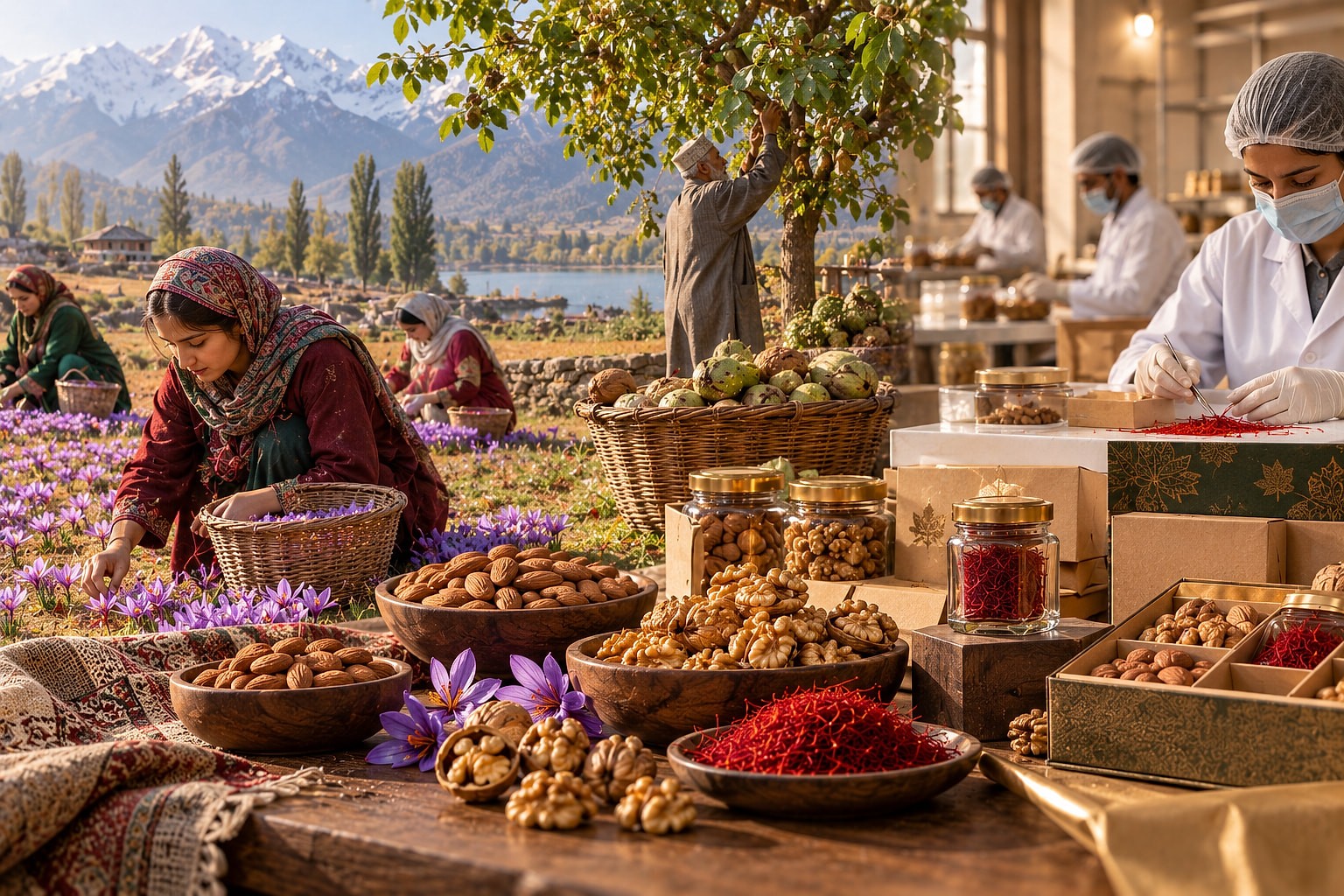
Journal · 3 minute read
A family with Kashmiri Pandit roots, a simple idea, and the dry fruits we would proudly buy for our own homes.
Read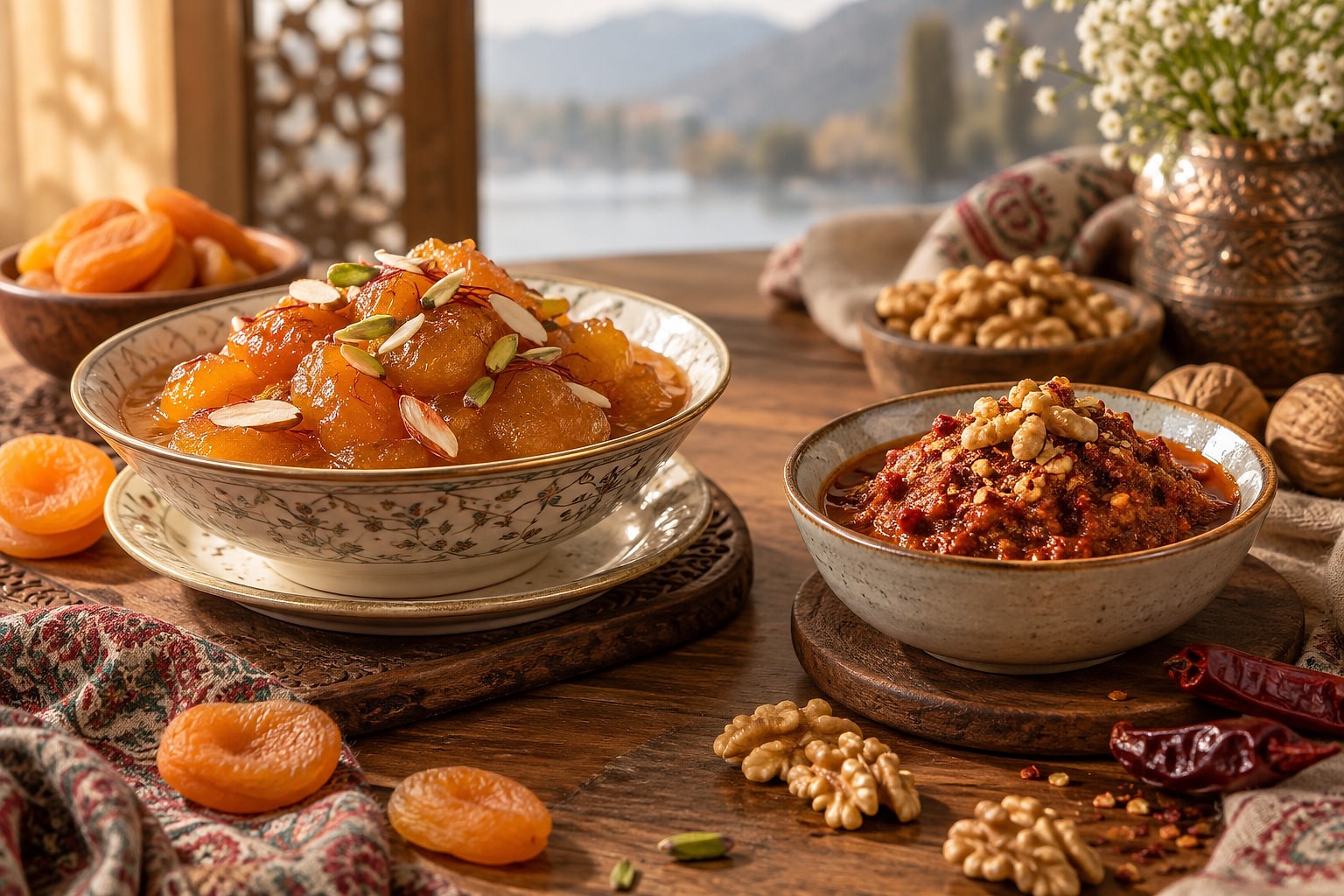
Four recipes
Four things worth cooking, and the one technique that decides whether your saffron was worth buying.
Read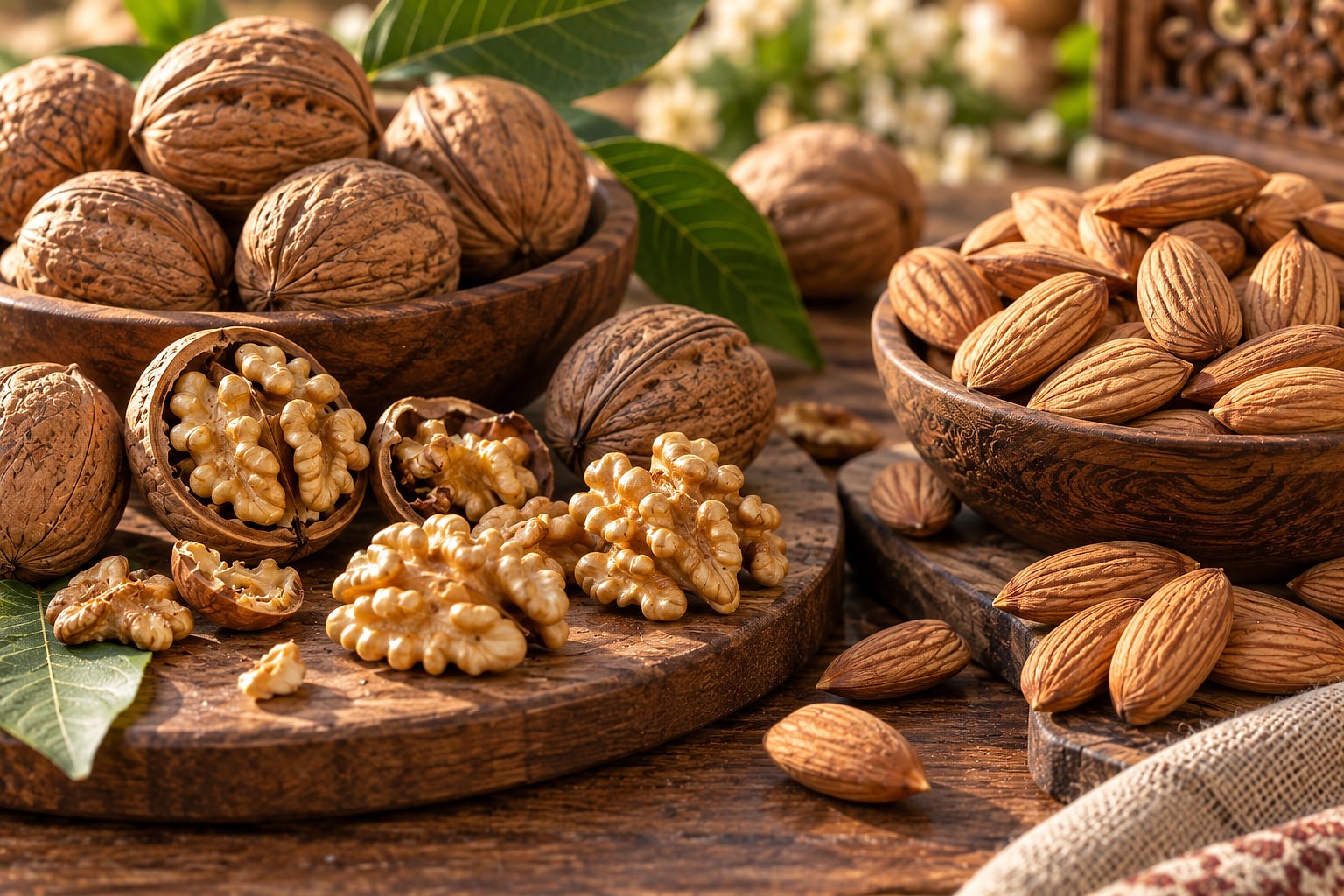
Freshness, grades and storage · 8 minute read
Nuts are the one category where the most expensive pack and the cheapest pack can be the same age, the same grade and from the same warehouse. Knowing what to look at is worth more than knowing what to pay.
Read