We use a session cookie to keep you signed in and your basket saved. Analytics cookies are set only if you accept. Cookie policy
Guide
Nuts are the one category where the most expensive pack and the cheapest pack can be the same age, the same grade and from the same warehouse. Knowing what to look at is worth more than knowing what to pay.
Freshness, grades and storage · 8 minute read
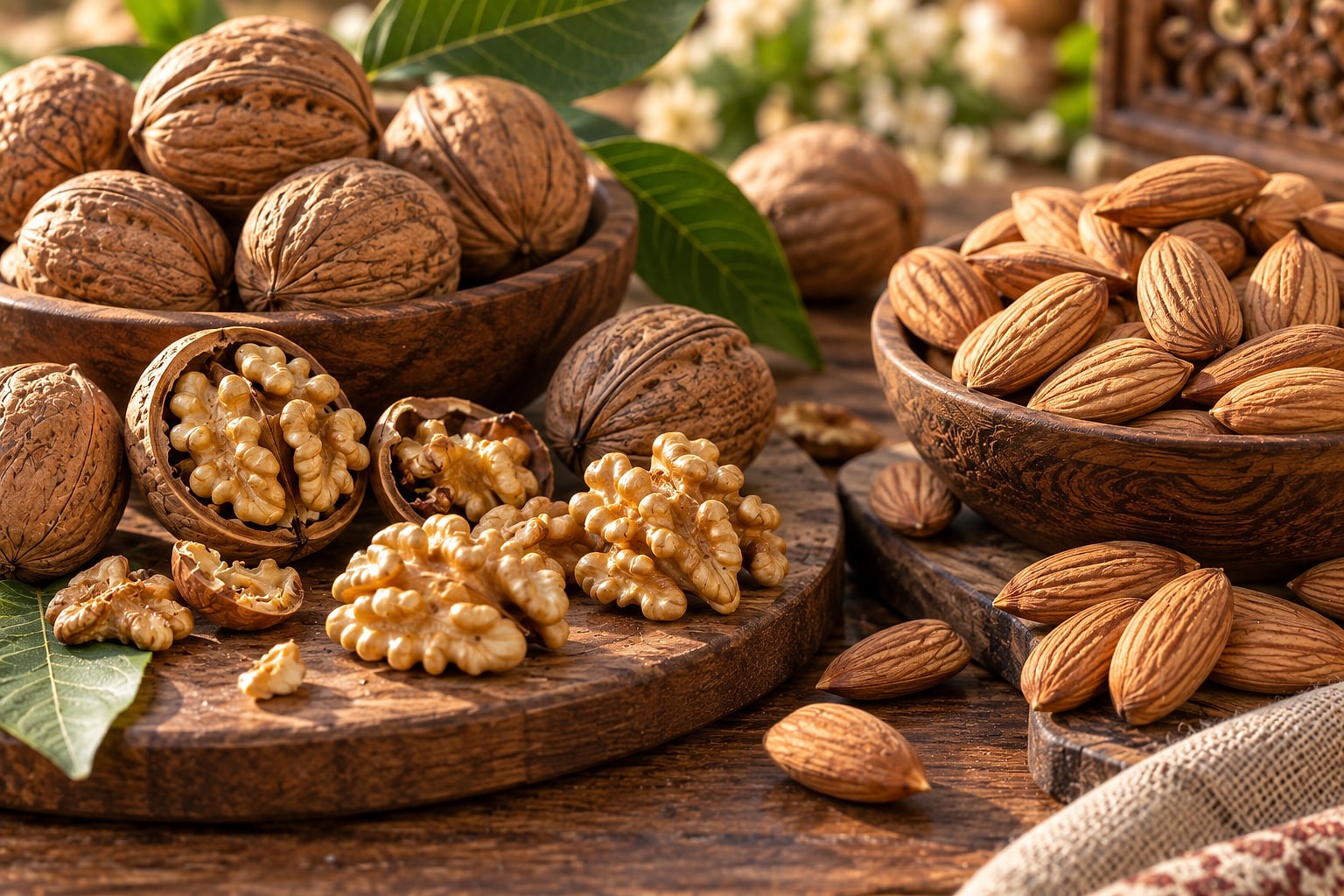
Nuts are the one category where the most expensive pack and the cheapest pack can be the same age, the same grade and from the same warehouse. Knowing what to look at is worth more than knowing what to pay.
Shell-on walnuts keep for months longer, because the shell does exactly what it evolved to do. Kernels are convenient and go rancid faster. If you eat walnuts slowly, buy them in shell and crack as you go; if you bake weekly, buy kernels and keep them cold.
Valley walnuts are generally thinner-shelled than most imported stock, which is why they yield more whole halves. Paper-shell varieties can be cracked by hand pressure alone. Neither is automatically better eating — it mainly changes how much work you do and how many halves you get.
This is the most common misunderstanding in the category. Mamra refers to a variety of almond, traditionally grown in Iran and Afghanistan and traded through the valley. The nuts are smaller, more irregular and noticeably higher in oil than the flat, uniform commodity almonds sold by the sack.
Some sellers use “Mamra” loosely to mean any premium almond. The test most people can run is soaking: a genuine Mamra stays firm and dense after an overnight soak and the skin slips off cleanly, where a commodity almond tends to go soft and slightly chalky.
| Mamra | Commodity almond | |
|---|---|---|
| Size and shape | Smaller, irregular, rounded | Larger, flat, uniform |
| Oil content | Higher | Lower |
| Texture soaked | Firm, dense | Softer |
| Typical price | Roughly double | Baseline |
| Best for | Eating, soaking | Grinding, baking, gravies |
Buying Mamra to grind into a paste. Once it is in a gravy, nobody on earth can tell. Spend the difference on the almonds you eat and buy the ordinary ones for cooking.
Both walnuts and almonds are high in oil, and oil oxidises with heat, light and air. That process is what makes nuts taste bitter, and no amount of premium grading survives bad storage.
Smell them first: rancid walnuts smell like old paint or crayons. On tasting, a sharp soapy bitterness that lingers means the oils have turned. Fresh kernels taste sweet with only a faint tannin edge.
For eating, especially soaked, most people say yes: they are denser and higher in oil. For grinding into pastes and gravies the difference disappears, so a standard almond is the better buy there.
Airtight and refrigerated. Kernels keep roughly six months in a fridge and as little as six weeks in a warm cupboard. Shell-on walnuts keep far longer, so buy those if you use them slowly.
Natural variation between trees, and between the light and dark halves of the same nut. Uniform dark amber across a whole pack is different and usually means age or warm storage.

Journal · 3 minute read
A family with Kashmiri Pandit roots, a simple idea, and the dry fruits we would proudly buy for our own homes.
Read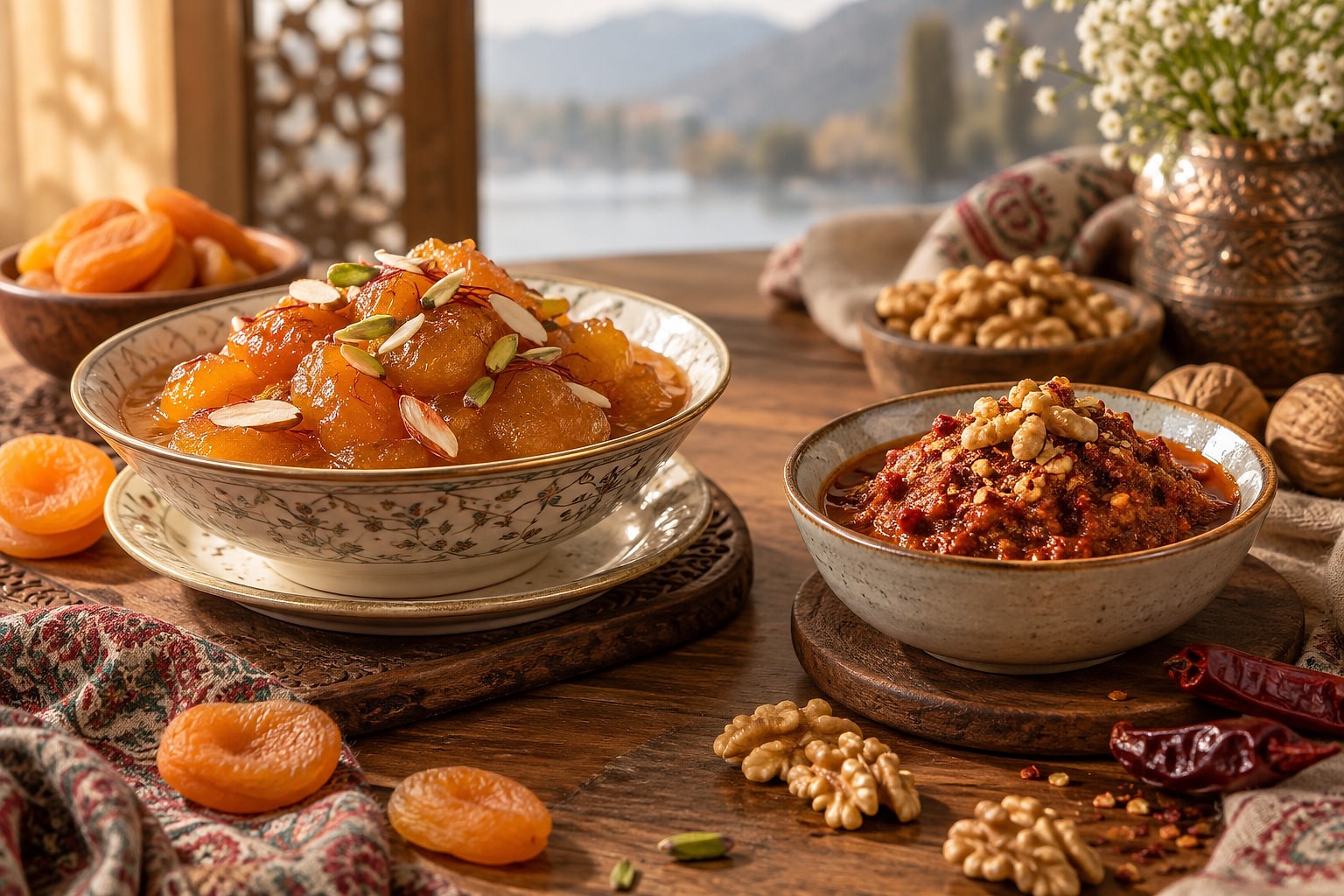
Four recipes
Four things worth cooking, and the one technique that decides whether your saffron was worth buying.
Read
Five tests, no equipment · 7 minute read
Saffron is among the most adulterated food products sold anywhere, and India is no exception. The good news is that the common fakes are easy to expose with things already in your kitchen. Please use these on anything you buy, including ours.
Read