


Kashmiri Specialities
Premium Kashmiri Saffron (Kesar)
Hand-picked whole strands · Saffron fields of Pampore, Kashmir
Price on request
We use a session cookie to keep you signed in and your basket saved. Analytics cookies are set only if you accept. Cookie policy
Guide
Saffron is among the most adulterated food products sold anywhere, and India is no exception. The good news is that the common fakes are easy to expose with things already in your kitchen. Please use these on anything you buy, including ours.
Five tests, no equipment · 7 minute read

Saffron is among the most adulterated food products sold anywhere, and India is no exception. The good news is that the common fakes are easy to expose with things already in your kitchen. Please use these on anything you buy, including ours.

A saffron stigma is trumpet-shaped. It is narrow at the base and flares out at the top into a slightly ragged, serrated end. Every thread should have this shape, and no two should be perfectly identical.
Dyed safflower petals are flat and even. Dyed corn silk is uniform in width along its whole length. Shredded paper or fibre is suspiciously consistent. If a tin looks machine-made, it probably was.
| Substitute | How to spot it |
|---|---|
| Dyed safflower petals | Flat, petal-shaped, no trumpet end. Colour floods the water immediately. |
| Dyed corn silk | Uniform width, slightly glossy, and softer than saffron. Tastes of nothing much. |
| Shredded dyed paper or fibre | Disintegrates in water rather than staying intact. Looks too even. |
| Real saffron with added weight | Threads feel damp, heavy or oily. Passes the water test but underperforms in cooking. |
| Real saffron, wrong grade | Genuine saffron sold at Mongra prices with pale style still attached. Not a fake, just dishonestly priced. |
Avoid it unless you know the seller extremely well. Powder hides everything the tests above rely on — shape, thread structure, grade — and it is trivially easy to cut with turmeric, paprika or starch. If you need powder, crush threads yourself just before use.
No. Real saffron releases a golden yellow colour into water, slowly, over several minutes. A red or orange-red colour appearing quickly usually means dye.
No. Saffron tastes faintly bitter and hay-like. A sweet taste is a strong sign of dyed or sugared substitute material.
It is a useful indicator, not proof. Real saffron in water with a pinch of baking soda tends to give a yellow colour, while some dyed substitutes give red. Use it alongside the other tests rather than on its own.
Most commonly dyed safflower petals, dyed corn silk, shredded dyed paper or coconut fibre. Real saffron is also sometimes adulterated with added moisture, oil or fine powder to increase weight.
Kashmiri Specialities
Hand-picked whole strands · Saffron fields of Pampore, Kashmir


Kashmiri Specialities
Raw, unheated · Trusted beekeepers of Pampore, Kashmir
Journal · 3 minute read
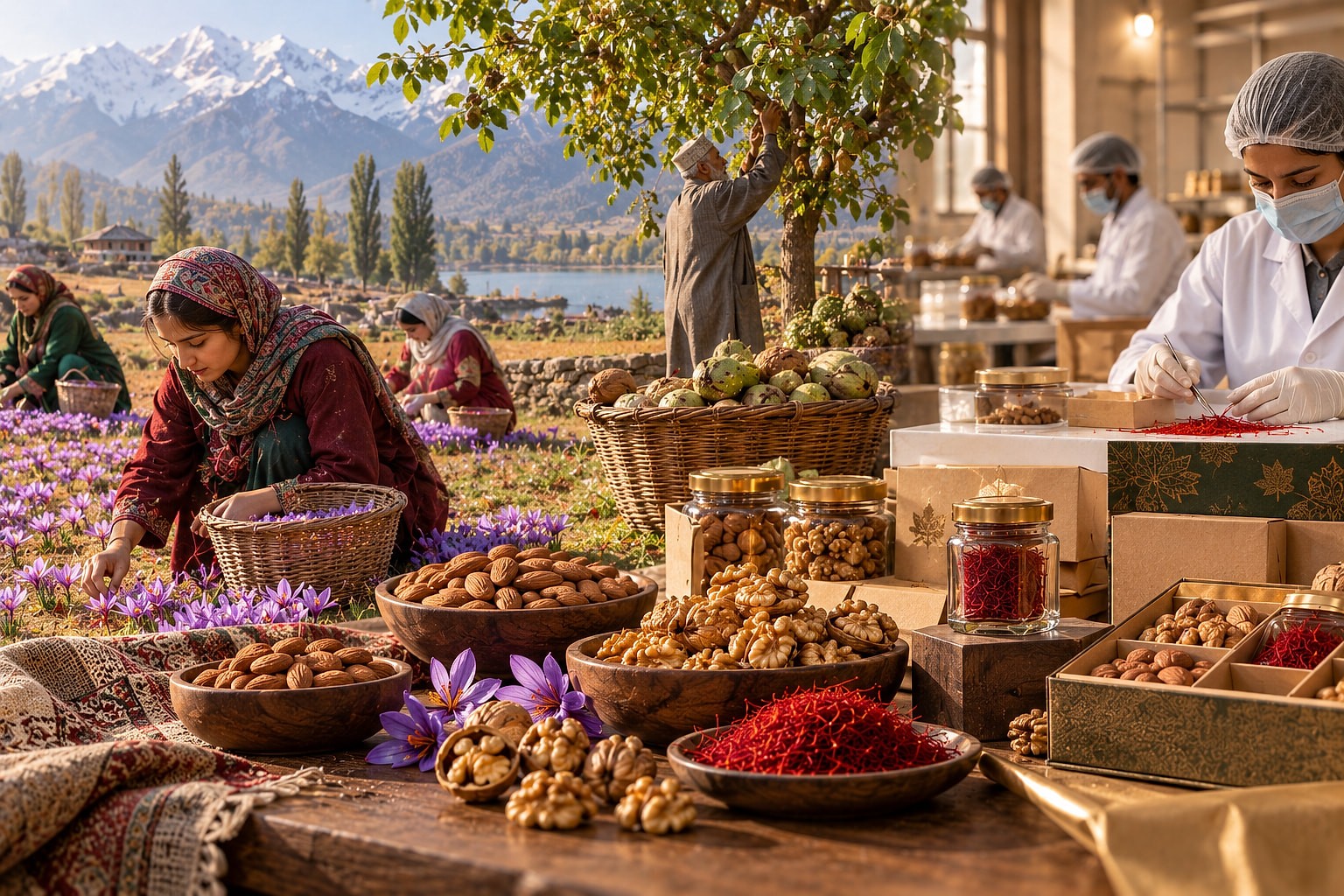
A family with Kashmiri Pandit roots, a simple idea, and the dry fruits we would proudly buy for our own homes.
Read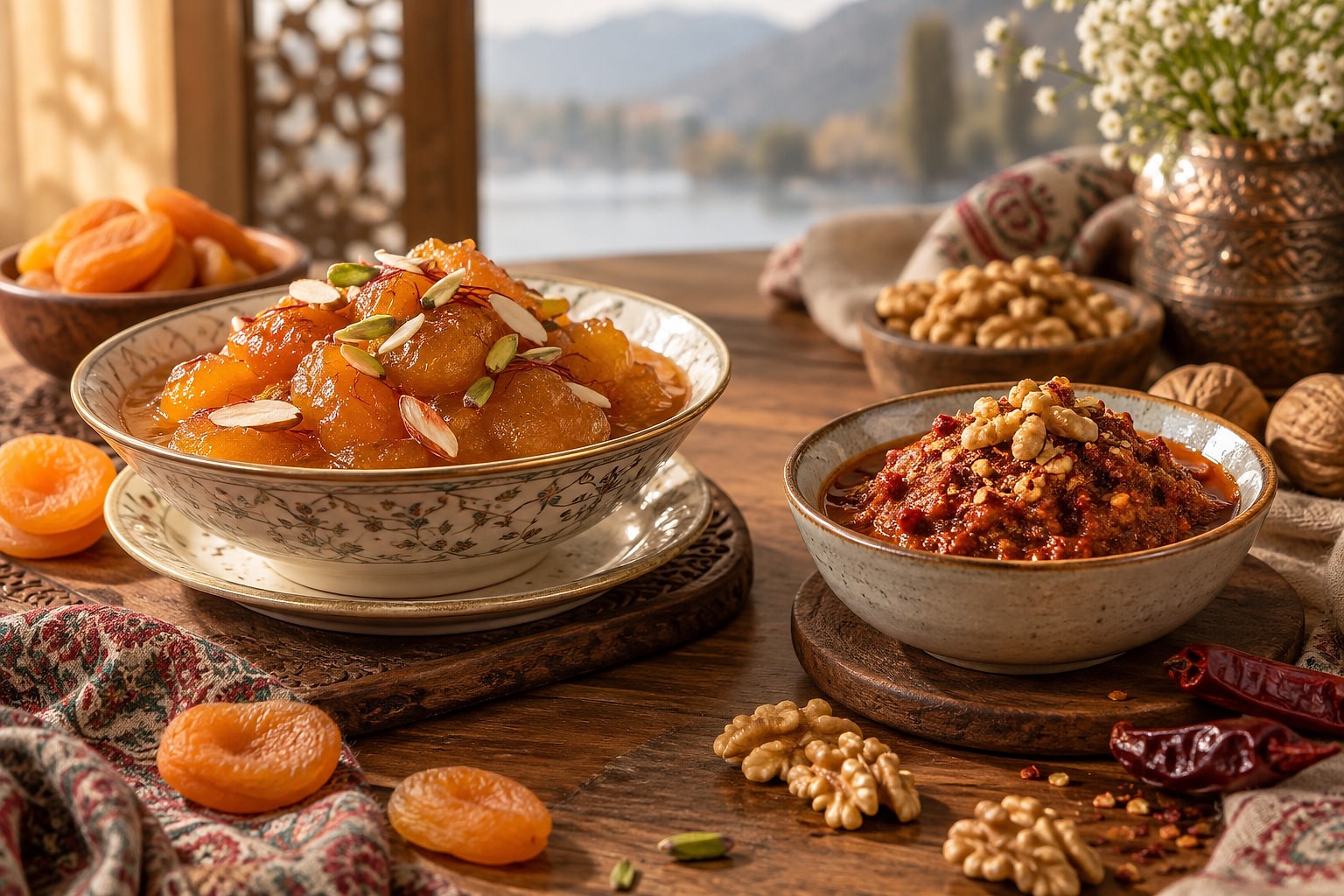
Four recipes
Four things worth cooking, and the one technique that decides whether your saffron was worth buying.
Read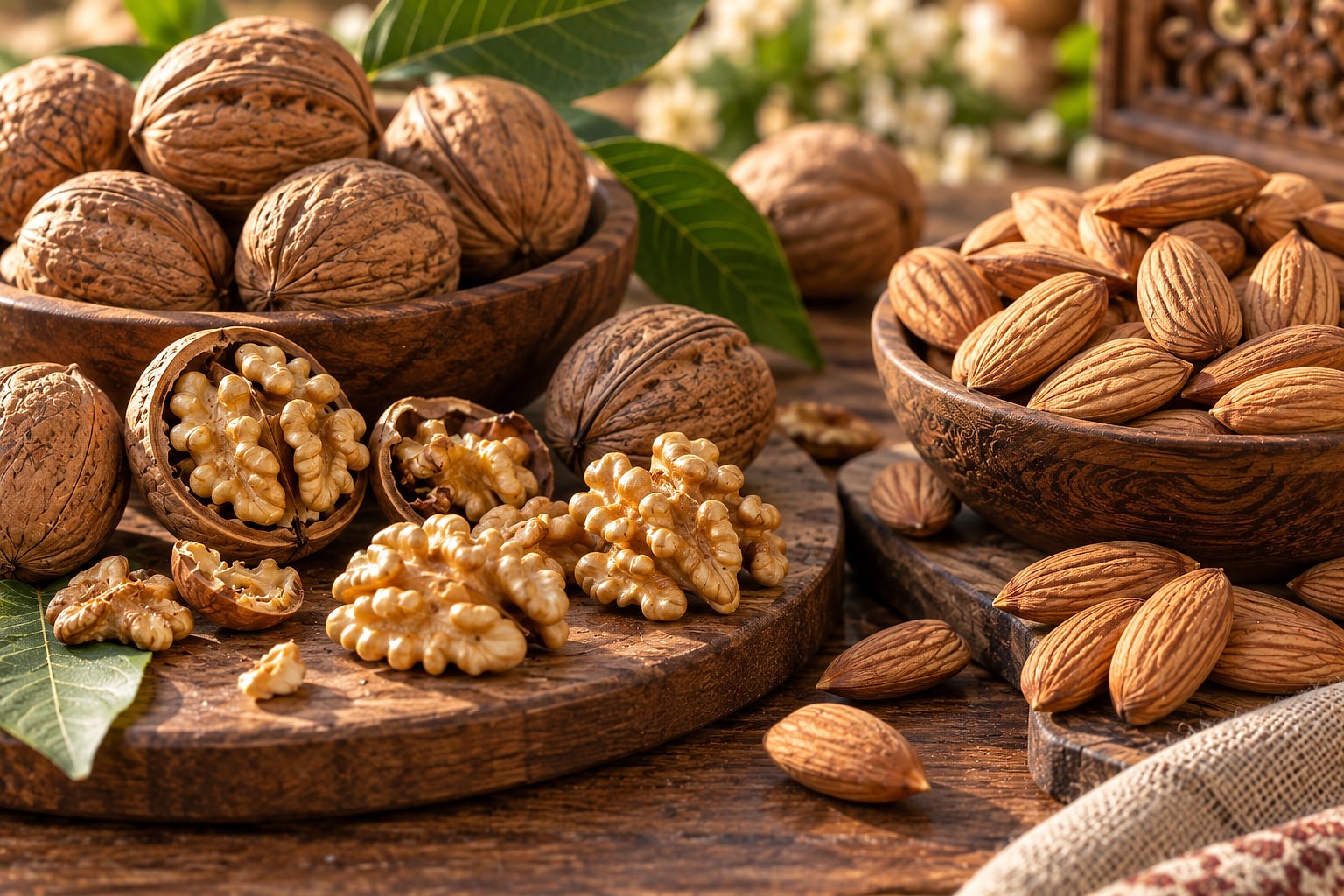
Freshness, grades and storage · 8 minute read
Nuts are the one category where the most expensive pack and the cheapest pack can be the same age, the same grade and from the same warehouse. Knowing what to look at is worth more than knowing what to pay.
Read